
I haven't posted on this blog since 2010, but I think it's time to resurrect Introspector Gadget.
For this comeback post, something I find worthwhile to discuss is the (relatively) new music streaming service, Bloom FM.
For a long time, I struggled to see the appeal of Spotify and stubbornly held onto the idea of downloading music to my computer, phone or tablet (I stopped buying CD's a very long time ago!). I didn't like the idea of streaming music since you never actually owned it and of course you were always dependent on having an Internet connection.
The problem was that I felt my MP3 music collection was becoming a bit stale, and needed a way to listen to new music in work without investing a fortune in iTunes downloads. Spotify free wasn't available on mobile devices at the time (it is now), and I wasn't quite ready to commit to a tenner a month for their Premium service.
Enter Bloom FM.
For just £1 a month you can listen to unlimited ad-free 'radio stations', defined by genre and also 'borrow' up to 20 tracks at a time, which you can listen to offline. This price does not include the unlimited streaming of specific artists as Spotify Premium, but for £9 a month less I found it difficult to argue. I don't attempt to compare the actual product offerings of Bloom FM vs Spotify, the comparison here is purely based on price.
The Bloom FM iPhone app itself is a work of art, with great usabiltiy, slick animations and instant loading of songs without interruptions.
I found that I could now borrow pretty much any album I was interested in (today it happened to be Chvrches - The Bones of What You Believe), and if I couldn't be bothered thinking for myself I could just spin the genre wheel and enjoy some Pearl Jam, Soundgarden, Foo Fighters and Alice in Chains via the 'Grunge' radio station.
So for the princely sum of just over 3 pence per day, I can follow my own musical direction or just let someone else queue up the songs for me.
It's not often I find something to be of such good value - and I would strongly recommend it to anyone who's interested in a low cost, high quality music streaming service.
The only changes I'd make is to add a way to suggest new genres (for example, I'd really like one for movie soundtracks), and a browser based version you can use on a PC or laptop.
For a more comprehensive review, check out the Telegraph website.
Showing posts with label opinion. Show all posts
Showing posts with label opinion. Show all posts


The Recession is Over, but We Haven't Finished Receding
It would seem that I was almost correct in my prediction in February 2009 about when the recession would end, but I wasn't quite there.
I thought that the UK economy would emerge from recession at the end of the first or second quarters of 2010, but it seems that the recesssion has officially come to an end as of the last quarter of 2009, with a 0.1% growth in that period.
But I wonder, does this mean fat bank balances, healthy order books, green shoots and bulls everywhere? Or does the fact that the government printed £200 billion pounds of new money and borrowed £178 billion mean that we have painted over the cracks with non drying paint? Will we be struggling to remove the stains from this period for years to come?
I think so.
I think that it will take a long time for the economy to become properly stable again, and for the MPC to raise interest rates again. It'll be 0.5% here, 0.5% there, starting towards the end of 2010. I do hope that it will take a few years to reach the likes of the pre-recession interest rate levels because I will continue to save money on my mortgage that way, but with the value of the pound being damaged by the low rates, the decision on when to raise rates and by how much will be a tough one.
Confidence and value in the pound needs to be restored, but it needs to be done without hammering Joe Public again who owns a small business and has a mortgage on his home and a lease agreement on his Mondeo.
We've seen some strong results posted by the BigCo's from around the world, such as Goldman Sachs, J.P.Morgan and Barclays, and a return to 'record bonuses' and the much publicised 'banker bashing' by politicians who take the short term view and are keen to curry favour with the non-discerning public. While I completely agree that a return to excessive risk taking and rewards for short term gain would be completely unacceptable, government driven initiatives such as the 50% bonus tax, plans to break up the biggest banks and to introduce new regulation to the OTC Derivatives market will only serve to destabilise Wall Street again and bring about uncertainty in the future.
I predict that in 2010, big banks will struggle to make as much profit as they did in 2009. New regulations and economic recovery mean that new ways of making money will have to be found rather than capitalising on certain types of investment which have become lucrative due to the desire for stable investments (gold, government and municipal bonds etc). And rather than making bucketloads of cash on complicated structured investments with investors facing each other directly, the focus will shift to making a little money on a lot of deals over exchange with clearing houses in the middle.
Things may be better in terms of unemployment, house prices and general consumer confidence, but I think people should still be cautious since we're not out of the woods yet - the bear is still in charge.
I thought that the UK economy would emerge from recession at the end of the first or second quarters of 2010, but it seems that the recesssion has officially come to an end as of the last quarter of 2009, with a 0.1% growth in that period.
But I wonder, does this mean fat bank balances, healthy order books, green shoots and bulls everywhere? Or does the fact that the government printed £200 billion pounds of new money and borrowed £178 billion mean that we have painted over the cracks with non drying paint? Will we be struggling to remove the stains from this period for years to come?
I think so.
I think that it will take a long time for the economy to become properly stable again, and for the MPC to raise interest rates again. It'll be 0.5% here, 0.5% there, starting towards the end of 2010. I do hope that it will take a few years to reach the likes of the pre-recession interest rate levels because I will continue to save money on my mortgage that way, but with the value of the pound being damaged by the low rates, the decision on when to raise rates and by how much will be a tough one.
Confidence and value in the pound needs to be restored, but it needs to be done without hammering Joe Public again who owns a small business and has a mortgage on his home and a lease agreement on his Mondeo.
We've seen some strong results posted by the BigCo's from around the world, such as Goldman Sachs, J.P.Morgan and Barclays, and a return to 'record bonuses' and the much publicised 'banker bashing' by politicians who take the short term view and are keen to curry favour with the non-discerning public. While I completely agree that a return to excessive risk taking and rewards for short term gain would be completely unacceptable, government driven initiatives such as the 50% bonus tax, plans to break up the biggest banks and to introduce new regulation to the OTC Derivatives market will only serve to destabilise Wall Street again and bring about uncertainty in the future.
I predict that in 2010, big banks will struggle to make as much profit as they did in 2009. New regulations and economic recovery mean that new ways of making money will have to be found rather than capitalising on certain types of investment which have become lucrative due to the desire for stable investments (gold, government and municipal bonds etc). And rather than making bucketloads of cash on complicated structured investments with investors facing each other directly, the focus will shift to making a little money on a lot of deals over exchange with clearing houses in the middle.
Things may be better in terms of unemployment, house prices and general consumer confidence, but I think people should still be cautious since we're not out of the woods yet - the bear is still in charge.
Apple Tablet: Will Steve's New Toy do the Job?
Many people apparently believe that Apple are about to announce a new gadget, the Apple Tablet.
Since it's such a work of art, I always thought it would be cool to take an iPod Touch and enlarge it by several times. It looks a bit like the Tablet (if it actually appears) will look just like that.
 I really hope that they do release such a gadget, because aside from an iPhone I've never owned a Mac. It looks like it could be the perfect first buy; possibly portable, durable and running Mac OS X, with a user experience that beats the hell out of Windows (not that difficult).
Of course, it's going to be expensive and demand will undoubtedly reach fever pitch,
so I better start saving!
Since it's such a work of art, I always thought it would be cool to take an iPod Touch and enlarge it by several times. It looks a bit like the Tablet (if it actually appears) will look just like that.
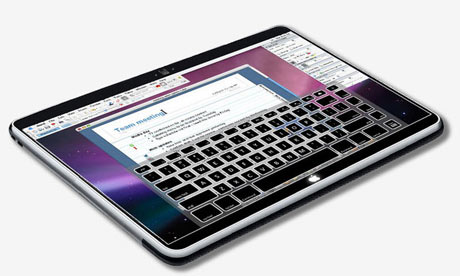 I really hope that they do release such a gadget, because aside from an iPhone I've never owned a Mac. It looks like it could be the perfect first buy; possibly portable, durable and running Mac OS X, with a user experience that beats the hell out of Windows (not that difficult).
 Of course, it's going to be expensive and demand will undoubtedly reach fever pitch,
so I better start saving!
Tech Preview: Palm Pre or iPhone 3GS?
It's been a long time since I've possessed what could be called a 'good phone'. This is because I always found myself willing to sacrifice having a decent handset for the sake of a free xbox 360, PS3 or Wii with my phone contract.
I'm finally out of contract with Orange, and dying to get a new phone with unlimited net access. The only two competitors are the Palm Pre...
 ...and the new iPhone.
 Both have a touch screen, both have unlimited data access, both can be used as an iPod (the Pre tricks iTunes into thinking it's an iPod), both have GPS and Wi-Fi and just about everything else you can imagine (see here for a full side-by-side comparison).
But when comparing the two online, I couldn't help but be more impressed with the Pre. It looks very sleek, and as if a lot of thought has gone into designing both the hardware and the WebOS operating system on it. It has brilliant multitasking capabilities, lots of ways to intelligently organise your data and do cool stuff with GPS and social networking sites.
That, in addition to the fact that I've never liked the look of the iPhone, meant that for the past couple of months the Pre has been at the top of my wish list.
At the WWDC conference in San Fransisco on Monday, Apple announced the iPhone 3GS which is basically a pimped out version of the existing iPhone 3G handset, with a few new features and a faster user experience. It appeals, but still sits second in my wish list when compared with the Pre.
Palm have released the Pre in the US already, but for some reason they have not stated a release date for the UK, where the iPhone 3GS is out on 19th June.
In the incredibly competetive smartphone market where the Pre is undoubtedly Palm's 'do or die' handset, this is an unbelievable error. There must be literally thousands of people like me, who want a new phone and can't decide between the Pre and the iPhone. These people would like to see what the Pre can do, but are not willing to hang around for months until Palm get their act together and set a release date. It's looking likely that I will get an iPhone next week (if there's enough available!) and that in my case, Palm have shot themselves in the foot by being too slow off the mark in releasing their much-hyped phone.
It's disappointing, but if you want to compete with Apple, you need to play the game. And Palm's move should have been to release the Pre in the UK before the iPhone 3GS, or at least a matter of days or weeks after.
Maybe they underestimate the importance of the European consumer electronics market. But they shouldn't, because it could mean their downfall.
I'm finally out of contract with Orange, and dying to get a new phone with unlimited net access. The only two competitors are the Palm Pre...
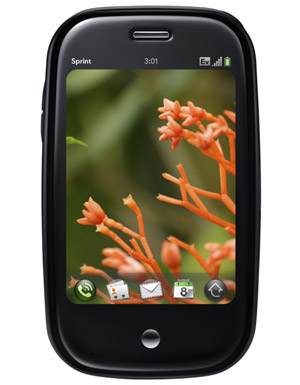 ...and the new iPhone.
 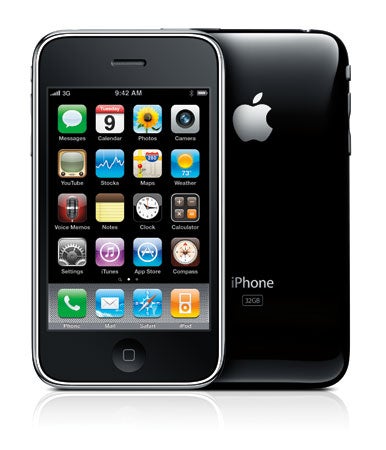 Both have a touch screen, both have unlimited data access, both can be used as an iPod (the Pre tricks iTunes into thinking it's an iPod), both have GPS and Wi-Fi and just about everything else you can imagine (see here for a full side-by-side comparison).
But when comparing the two online, I couldn't help but be more impressed with the Pre. It looks very sleek, and as if a lot of thought has gone into designing both the hardware and the WebOS operating system on it. It has brilliant multitasking capabilities, lots of ways to intelligently organise your data and do cool stuff with GPS and social networking sites.
That, in addition to the fact that I've never liked the look of the iPhone, meant that for the past couple of months the Pre has been at the top of my wish list.
At the WWDC conference in San Fransisco on Monday, Apple announced the iPhone 3GS which is basically a pimped out version of the existing iPhone 3G handset, with a few new features and a faster user experience. It appeals, but still sits second in my wish list when compared with the Pre.
Palm have released the Pre in the US already, but for some reason they have not stated a release date for the UK, where the iPhone 3GS is out on 19th June.
In the incredibly competetive smartphone market where the Pre is undoubtedly Palm's 'do or die' handset, this is an unbelievable error. There must be literally thousands of people like me, who want a new phone and can't decide between the Pre and the iPhone. These people would like to see what the Pre can do, but are not willing to hang around for months until Palm get their act together and set a release date. It's looking likely that I will get an iPhone next week (if there's enough available!) and that in my case, Palm have shot themselves in the foot by being too slow off the mark in releasing their much-hyped phone.
It's disappointing, but if you want to compete with Apple, you need to play the game. And Palm's move should have been to release the Pre in the UK before the iPhone 3GS, or at least a matter of days or weeks after.
Maybe they underestimate the importance of the European consumer electronics market. But they shouldn't, because it could mean their downfall.
Ahh, Outlook! DIE, LOTUS NOTES!
This is 2009 (gasp!). One of my biggest bugbears about working for a huge company is that we are often subjected to archaic technology.
To be fair, we also get to use some bleeding edge stuff, it's quite a mix.
Up until very recently we had been using Lotus Notes 6.5, which is software that seems like it has been designed by a monkey with learning difficulties. The interface is slow, clunky and ugly, its usability is close to zero and continually hangs and crashes. If you find Notes has hung and you kill off the process, you usually have to reboot your PC in order to successfully launch it again. Not only that, if you type an email in Lotus Notes in one font, there's no guarantee that it will look even remotely similar to the recipient.
We had been using it for email and to host databases (annual leave requests, some application workflow pieces etc).
Finally, it would seem that the powers that be finally decided to listen to the cries of 'BOLLOCKS, NOTES HAS CRASHED AGAIN' and 'HOW DO I LAUNCH ZAPNOTES?', and made the decision that we would migrate to Microsoft Outlook across the organisation. It's been a long process, but a well managed project.
Anyway, I think Outlook is a breath of fresh air. Now normally I'm no Microsoft proponent, and I believe that they are as guilty as IBM or Lotus of producing sub-standard software which belongs in the bin. But Outlook seems to be very stable, well designed and it has a nice sleek interface which makes it a pleasure to use. And for me, one of the best bits is that when you write an email in Outlook, that's how it will look to the other person! Woawhh!
The Outlook window stretches nicely across my two monitors, with one side containing the email list and the other a preview window for the selected email.
To be fair, we also get to use some bleeding edge stuff, it's quite a mix.
Up until very recently we had been using Lotus Notes 6.5, which is software that seems like it has been designed by a monkey with learning difficulties. The interface is slow, clunky and ugly, its usability is close to zero and continually hangs and crashes. If you find Notes has hung and you kill off the process, you usually have to reboot your PC in order to successfully launch it again. Not only that, if you type an email in Lotus Notes in one font, there's no guarantee that it will look even remotely similar to the recipient.
We had been using it for email and to host databases (annual leave requests, some application workflow pieces etc).
Finally, it would seem that the powers that be finally decided to listen to the cries of 'BOLLOCKS, NOTES HAS CRASHED AGAIN' and 'HOW DO I LAUNCH ZAPNOTES?', and made the decision that we would migrate to Microsoft Outlook across the organisation. It's been a long process, but a well managed project.
Anyway, I think Outlook is a breath of fresh air. Now normally I'm no Microsoft proponent, and I believe that they are as guilty as IBM or Lotus of producing sub-standard software which belongs in the bin. But Outlook seems to be very stable, well designed and it has a nice sleek interface which makes it a pleasure to use. And for me, one of the best bits is that when you write an email in Outlook, that's how it will look to the other person! Woawhh!
The Outlook window stretches nicely across my two monitors, with one side containing the email list and the other a preview window for the selected email.

It saves you opening every email that arrives to see what it contains, to find that it's crud and to close it immediately. Having a to-do bar on the right hand side also helps me to be more organised, because there's an obvious indicator which is on screen for a significant portion of the day which highlights the upcoming meetings, appointments and to-do tasks. I never used to use the to-do list in Notes because I never opened it. But having something which is almost always visible means that I'm much more likely to note things I've to catch up on, and thus more likely to actually do them.
Finally, something from Microsoft which does the job it's designed to do, and does it well.
You're obese, get off the plane!
A couple of times, I've been charged a fortune for going one or two kilos over my allowed baggage weight.
Most times it led me to grumble about how unfair it is that the large number of enormous people who are given the same baggage allowance as me, fly on the same plane while taking up a hell of a lot more weight and space in the cabin, with their rolls of fat, sausage gut and morbidly obese massiveness.
Of course, I never thought that any airline would share that completely non-politically correct opinion - especially an airline in the U.S.
But United Airlines have had hundreds of complaints from people who've had the same thought as me, yet acted on it by making their thoughts known to the airline.
So the Guardian reports that United have decided to bump fat people off busy flights, and make them pay for TWO SEATS on the next flight! That's wild!
But I completely agree. Clearly it would be unfair to discriminate against people who are moderately chubby, since it could be argued that they don't actually make much of an impact on the space left for other passengers. But when someone can't fit into a seat then damn right, make them pay for the two seats they take up!
On another note, apparently fat people are being blamed for Global Warming. Now that's ridiculous.
Most times it led me to grumble about how unfair it is that the large number of enormous people who are given the same baggage allowance as me, fly on the same plane while taking up a hell of a lot more weight and space in the cabin, with their rolls of fat, sausage gut and morbidly obese massiveness.
Of course, I never thought that any airline would share that completely non-politically correct opinion - especially an airline in the U.S.
But United Airlines have had hundreds of complaints from people who've had the same thought as me, yet acted on it by making their thoughts known to the airline.
So the Guardian reports that United have decided to bump fat people off busy flights, and make them pay for TWO SEATS on the next flight! That's wild!
But I completely agree. Clearly it would be unfair to discriminate against people who are moderately chubby, since it could be argued that they don't actually make much of an impact on the space left for other passengers. But when someone can't fit into a seat then damn right, make them pay for the two seats they take up!
On another note, apparently fat people are being blamed for Global Warming. Now that's ridiculous.
Fuel Duty Increase: The Last Straw
I'm sick of paying through the nose for fuel tax and not knowing where the money goes. I'm sick of the roads in Britain - and in particular in Glasgow.
I wrote to my M.P today:
FOR THE ATTENTION OF:
John Robertson MP
Glasgow North West
Friday 10 April 2009
Dear John Robertson,
I am writing to request that you bring up the issue of fuel duty in Parliament prior to the Budget on April 22.
I am an ordinary householder who lives in the Glasgow area, and would normally be reluctant to write such a letter as this. But I feel it's time that I passed on my thoughts on the current situation with regards to fuel duty and the state of Glasgow's roads.
I understand that there is potentially going to be a 2p petrol tax rise in the next budget, which I think is unacceptable for several reasons:
- Ordinary people already have to pay the huge 71% cost in petrol tax, and given the current economic situation it seems bizarre that when the government say they are trying to give people more money to spend in order to revive the economy, they take this money right back again through other means.
- For example, I run a little Renault Clio and only spend £50 a week on petrol. This proposed hike in fuel duty will cost me £58 a year, above the already exorbitant prices I am subjected to.
- The government seem desperate to revive the motoring industry, manufacturing and infrastructure - yet they stab these industries in the heart by demanding another increase in the already crippling cost of fuel.
- I would like to see greater visibility on what exactly this tax is spent on, and in particular, exactly where this new 2p tax rise would go.
- If fuel tax is spent on anything other than transport, roads, or the various government organisations which look after Britain's motorists, the government should have to publicly explain why.
In addition, I would like to complain about the terrible state of the roads in Glasgow. You will have seen recent news reports that research carried out on Britain's roads and its motorists concluded that people in Scotland and Northern England appear to have much worse roads than those in the rest of the UK. I accept that these studies do not always paint a truly accurate picture, yet it lines up with the view I have taken for some time now.
On two occasions in the past year, my car has been damaged by these terrible roads to the point where I have had to spend my own money on repairing bent suspension, buckled wheels and burst tyres. The roads are cracked and sagging, there are huge holes in them and there seems to be very little getting done about it.I would think that many people would really appreciate it if a Member of Parliament who represents a Scottish constituency would stand up and speak out on this issue, in order to let the government know that it is not acceptable that people are left to pay the price of damage to their cars due to the mismanagement and irresponsibility of those in power.
We are spending hundreds of millions of pounds on the M74 extension, yet Glasgow's roads are in a worse state than they have ever been. I would like to know: why is this?
I understand that this letter may come across as more of a rant than a constructive request for representation, but I think that it illustrates the view of an ordinary person who feels that they are being short changed by the government, and that nobody appears to be standing up and publicly asking for change in behalf of those they represent.
I would like to receive a reply to this letter, outlining your thoughts on it and anything you plan to do in response to the points I have made. Thank you for your efforts in advance.
Yours sincerely,
Philip Reid
I wrote to my M.P today:
FOR THE ATTENTION OF:
John Robertson MP
Glasgow North West
Friday 10 April 2009
Dear John Robertson,
I am writing to request that you bring up the issue of fuel duty in Parliament prior to the Budget on April 22.
I am an ordinary householder who lives in the Glasgow area, and would normally be reluctant to write such a letter as this. But I feel it's time that I passed on my thoughts on the current situation with regards to fuel duty and the state of Glasgow's roads.
I understand that there is potentially going to be a 2p petrol tax rise in the next budget, which I think is unacceptable for several reasons:
- Ordinary people already have to pay the huge 71% cost in petrol tax, and given the current economic situation it seems bizarre that when the government say they are trying to give people more money to spend in order to revive the economy, they take this money right back again through other means.
- For example, I run a little Renault Clio and only spend £50 a week on petrol. This proposed hike in fuel duty will cost me £58 a year, above the already exorbitant prices I am subjected to.
- The government seem desperate to revive the motoring industry, manufacturing and infrastructure - yet they stab these industries in the heart by demanding another increase in the already crippling cost of fuel.
- I would like to see greater visibility on what exactly this tax is spent on, and in particular, exactly where this new 2p tax rise would go.
- If fuel tax is spent on anything other than transport, roads, or the various government organisations which look after Britain's motorists, the government should have to publicly explain why.
In addition, I would like to complain about the terrible state of the roads in Glasgow. You will have seen recent news reports that research carried out on Britain's roads and its motorists concluded that people in Scotland and Northern England appear to have much worse roads than those in the rest of the UK. I accept that these studies do not always paint a truly accurate picture, yet it lines up with the view I have taken for some time now.
On two occasions in the past year, my car has been damaged by these terrible roads to the point where I have had to spend my own money on repairing bent suspension, buckled wheels and burst tyres. The roads are cracked and sagging, there are huge holes in them and there seems to be very little getting done about it.I would think that many people would really appreciate it if a Member of Parliament who represents a Scottish constituency would stand up and speak out on this issue, in order to let the government know that it is not acceptable that people are left to pay the price of damage to their cars due to the mismanagement and irresponsibility of those in power.
We are spending hundreds of millions of pounds on the M74 extension, yet Glasgow's roads are in a worse state than they have ever been. I would like to know: why is this?
I understand that this letter may come across as more of a rant than a constructive request for representation, but I think that it illustrates the view of an ordinary person who feels that they are being short changed by the government, and that nobody appears to be standing up and publicly asking for change in behalf of those they represent.
I would like to receive a reply to this letter, outlining your thoughts on it and anything you plan to do in response to the points I have made. Thank you for your efforts in advance.
Yours sincerely,
Philip Reid
Fact of Life #2: If it seems too good to be true, it probably is
I'm in the market for a new telly, since I'm doing up my 'den' room.
I've put a nice leather couch in it, got my desk all set up and the last thing to add is a telly. In the room next door are my consoles, and I want the option of playing them either in the living room or in the den, without having to physically move them or buy new consoles altogether. So I plan to get a 3 in, 2 out HDMI splitter which will allow me to run an HDMI cable through the wall to the den room while not interrupting the TV signal in the living room. With the wireless controllers on 360 and PS3, I should be able to use the machines even though they're through the wall.
So when I saw an advert in the paper for an auction being held in the Crowne Plaza Glasgow by a company who I will not name, I was intrigued. The advert said something like:
'Fine art auction. Hotel Clearance, Customs and Government auctions.
Blah, blah, blah. The auction was taking place near where I live, so I decided to go along and take a look. Having never been to an auction before, I wasn't sure what to expect, but I will not be going back to one run by that particular company.
Like the advert said, there was a huge amount of items for sale, including HD TVs of all makes and sizes, cases of wine and champagne, paintings, laptops, furniture, the lot. So I was quite impressed at first, but wasn't sure about the fact that there was only an hour to view the items and there was no catalogue or agenda for when each item would be auctioned.
The guy who conducted the auction absolutely loved the sound of his own voice, and babbled away for about half an hour, desperately trying to build the appearance of a friendly rapport with the huge audience before finally getting on with the business in hand. Since I know nothing about art or wine, I couldn't be bothered with the paintings, furniture or wine auctions, and was hoping that I wouldn't have to wait too long to see what prices the TVs and laptops went for.
After about an hour, the first laptop came up (a Dell Studio 15, average spec) for sale and went for more than you could buy it for from Dell. The price started at £50, and immediately dozens of people put their hands up. Now I know that people can be stupid, but there were so many people willing to inflate the auction price that I can only assume that some were planted there by the auction company. Basic logic would tell you not to bid too quickly, and keep the price low - especially when you consider that there were multiples of most items and that as soon as the first one was sold, the rest of them were offered to other bidders at the same winning bid price.
The auctioneer was a smarmy git. He tried to placate the audience by saying that in the past they had bid too high for items which you can get cheaper elsewhere, and that he would try to keep the prices down in order to give people the best deal. What a load of tosh.
After what seemed like an eternity of horrible paintings, crap redwood furniture and boxes of ties and unknown perfume brands, one or two TVs were auctioned. Dozens of people ended up paying £187.50 for a really crappy 19 inch LCD TV (sale price was £150, then add 10% auctioneer commission and 15% VAT = £187.50) which you can buy for £100 online. RIP OFF (Though to be fair, the additional 25% was clearly indicated on the auction leaflet and by the auctioneer).
They then sold a Sharp 50 inch 1080p Plasma TV for £600 (£750) which you can get for £645 online.
Even though I was disappointed, I was still intrigued by the auction process. So I stayed a bit longer to see what prices the rest of the stuff would go for. The auction swiftly returned to the horrible paintings and crap furniture, with the occasional laptop sale in between.
After three hours in total, I gave up. The whole thing was a farce, and I feel bad for the stupidity of the people who paid a fortune for something they could've gotten from a local retailer for a lot less.
My conclusion then, is this: if you are looking for something specific, do your research. Check out the online prices, because if you go to one of these 'auctions' you will most likely NOT get a cheaper price. Take the easy route, buy your item from a reputable online retailer and save yourself the hassle of being conned by a company who try to give the impression they're looking out for the bidders, but who actually want to fleece them for every penny they've got.
Fact of Life #2: If it seems too good to be true, it probably is
I've put a nice leather couch in it, got my desk all set up and the last thing to add is a telly. In the room next door are my consoles, and I want the option of playing them either in the living room or in the den, without having to physically move them or buy new consoles altogether. So I plan to get a 3 in, 2 out HDMI splitter which will allow me to run an HDMI cable through the wall to the den room while not interrupting the TV signal in the living room. With the wireless controllers on 360 and PS3, I should be able to use the machines even though they're through the wall.
So when I saw an advert in the paper for an auction being held in the Crowne Plaza Glasgow by a company who I will not name, I was intrigued. The advert said something like:
'Fine art auction. Hotel Clearance, Customs and Government auctions.
Valuable paintings, fine wines and champagne, all at heavily reduced prices to clear.
Also available are HD Televisions all with full manufacturers warranty, in sizes from 26 inch to 50 inch, LCD and Plasma. Reserve prices starting from £100.
Laptops, brand new with warranties from manufacturers such as Dell, HP and Toshiba. Starting prices from only £50'
Blah, blah, blah. The auction was taking place near where I live, so I decided to go along and take a look. Having never been to an auction before, I wasn't sure what to expect, but I will not be going back to one run by that particular company.
Like the advert said, there was a huge amount of items for sale, including HD TVs of all makes and sizes, cases of wine and champagne, paintings, laptops, furniture, the lot. So I was quite impressed at first, but wasn't sure about the fact that there was only an hour to view the items and there was no catalogue or agenda for when each item would be auctioned.
The guy who conducted the auction absolutely loved the sound of his own voice, and babbled away for about half an hour, desperately trying to build the appearance of a friendly rapport with the huge audience before finally getting on with the business in hand. Since I know nothing about art or wine, I couldn't be bothered with the paintings, furniture or wine auctions, and was hoping that I wouldn't have to wait too long to see what prices the TVs and laptops went for.
After about an hour, the first laptop came up (a Dell Studio 15, average spec) for sale and went for more than you could buy it for from Dell. The price started at £50, and immediately dozens of people put their hands up. Now I know that people can be stupid, but there were so many people willing to inflate the auction price that I can only assume that some were planted there by the auction company. Basic logic would tell you not to bid too quickly, and keep the price low - especially when you consider that there were multiples of most items and that as soon as the first one was sold, the rest of them were offered to other bidders at the same winning bid price.
The auctioneer was a smarmy git. He tried to placate the audience by saying that in the past they had bid too high for items which you can get cheaper elsewhere, and that he would try to keep the prices down in order to give people the best deal. What a load of tosh.
After what seemed like an eternity of horrible paintings, crap redwood furniture and boxes of ties and unknown perfume brands, one or two TVs were auctioned. Dozens of people ended up paying £187.50 for a really crappy 19 inch LCD TV (sale price was £150, then add 10% auctioneer commission and 15% VAT = £187.50) which you can buy for £100 online. RIP OFF (Though to be fair, the additional 25% was clearly indicated on the auction leaflet and by the auctioneer).
They then sold a Sharp 50 inch 1080p Plasma TV for £600 (£750) which you can get for £645 online.
Even though I was disappointed, I was still intrigued by the auction process. So I stayed a bit longer to see what prices the rest of the stuff would go for. The auction swiftly returned to the horrible paintings and crap furniture, with the occasional laptop sale in between.
After three hours in total, I gave up. The whole thing was a farce, and I feel bad for the stupidity of the people who paid a fortune for something they could've gotten from a local retailer for a lot less.
My conclusion then, is this: if you are looking for something specific, do your research. Check out the online prices, because if you go to one of these 'auctions' you will most likely NOT get a cheaper price. Take the easy route, buy your item from a reputable online retailer and save yourself the hassle of being conned by a company who try to give the impression they're looking out for the bidders, but who actually want to fleece them for every penny they've got.
Fact of Life #2: If it seems too good to be true, it probably is
Snowboarding in Scotland: Glenshee or Glensheet? The Lecht or the Shect?
I used to think I was quite good at snowboarding. I've been to France quite a few times, mostly to the amazing resort of Tignes. But I can't even handle a simple poma, I must've fallen off about ten times yesterday!
Anyway regardless of my ability, I think that snowboarding is one of the most incredible things you can do, and I always try to promote it to people. There's nothing quite like thundering down a mountainside, taking in some of the most beautiful scenery on the planet, knowing that the chances are if you fall, it won't hurt that much.
Snowboarding is something that I think everyone should try at least once, but up until recently I would've recommended that nobody go to the ski resorts in Scotland. But since I haven't been able to go to France for a few years, I thought that desperate times called for desperate measures and agreed to go to Glenshee for the day.
It was brilliant! We had sunshine most of the day, and the runs had a lot of good coverage.
There was fresh powder on most of the hills with one or two icy patches, particularly on the Sunnyside run (which was still easily usable, even with the patches), with the best runs to be found at the back of the range, near to the Coire Flonn Pomas.
Anyway regardless of my ability, I think that snowboarding is one of the most incredible things you can do, and I always try to promote it to people. There's nothing quite like thundering down a mountainside, taking in some of the most beautiful scenery on the planet, knowing that the chances are if you fall, it won't hurt that much.
Snowboarding is something that I think everyone should try at least once, but up until recently I would've recommended that nobody go to the ski resorts in Scotland. But since I haven't been able to go to France for a few years, I thought that desperate times called for desperate measures and agreed to go to Glenshee for the day.
It was brilliant! We had sunshine most of the day, and the runs had a lot of good coverage.
There was fresh powder on most of the hills with one or two icy patches, particularly on the Sunnyside run (which was still easily usable, even with the patches), with the best runs to be found at the back of the range, near to the Coire Flonn Pomas.

In addition to the fenced off runs, there were some brilliant off piste areas with powder up to about two feet deep in places, which I did not think was possible in Scotland.

The facilities are a bit bare, and you do need to be able to rush up to the mountains at the last minute when the weather is good, but I think that on a good day you can get some brilliant boarding done in Scotland. It doesn't even begin to compare to some of the foreign resorts, but it's certainly worth the effort.
I'm glad I went up, and will definitely be going next year when the snow returns.
Mobile Phone Review: Nokia 5800 ExpressMusic
How times have changed. In 1999 when I was 15, I plucked up the courage to spend £40 (all the money I had in the world) and went into the Vodafone shop and got my first mobile, a little Trium Astral:

At the time, in a world where not too many people had mobile phones, I was absolutely dumfounded by its features. The fancy little flashing green light at the top to alert you of a call or a text, the extending aerial and the impressive three lines of text you could fit on it's 'giant' screen. Let's see how it stacks up to modern phones:
Camera: No
T9 Predictive Text: No
GPS: No
GPRS: No
HSCSD: No
EDGE: No
3G: No
WiFi: No
Bluetooth: No
Infrared port: No
USB: No
Hmm, 'No', then. Conversely, a phone which answers 'Yes' to all of those bullet points and many more is the Nokia 5800 ExpressMusic:
Now, that's become a reality and you could be miles away from home or a WiFi connection and still order your ASDA shopping or upload your latest photos to Facebook. Some of the 5800's main features are:
- 3.2 inch touchscreen display with response feedback
- 3.2 megapixel camera with Carl Zeiss lens and dual flash
- Integrated GPS and Nokia Maps application
- 8GB memory (via upgradable MicroSD card)
- Wi-Fi, Bluetooth, GPRS, EDGE, HSCSD etc
- An accelerometer which tilts the screen depending on which way up you hold the phone.
- Nokia's 'ExpressMusic' feature which gives you an impressive one year's unlimited music downloads (you even get to keep the stuff you've downloaded after the year is up!)
I won't write about its specifications in a huge amount of detail, since loads of others have reviewed it. I just wanted to record my thoughts on it so far.
The 5800 is a lot smaller than I thought it'd be. It's actually a very neat little phone which isn't embarrasingly large, and won't make you look like a twit when you whip it out to see where the nearest pub is when you're lost. It comes with a decent protector which you slide the phone in and out of, which is good because if you left the phone in your pocket or bags with keys or coins, you'd have to make a claim on your insurance. There's a stylus clipped into the back of the phone, but for those who don't like to be seen using them, you can prod at the screen with your fingers (I found it's not really all that responsive to touch, particularly on small web page links etc), or attach the little 'plectrum' which comes with it and use that instead.
The operating system is Symbian OS (all Nokias are, as far as I know), and this is where I was a bit disappointed. I was hoping to see a completely revamped system which would be able to compete with the iPhone in terms of usability and design. But it's just a scaled up version of what you find on smaller Nokia phones, with extra features added to support the larger screen and touch response. I'd rather they'd pulled out all the stops to make the animations and transitions as sleek and smooth as the iPhone, since for me that's one of the iPhone's greatest selling points. But unfortunately, they've just done enough to make it acceptable and I don't think the menus or navigation are particularly intuitive or user friendly.
The screen also looks a little bit grainy and dull to me, and doesn't seem to glow as brightly as other phones (even the meagre 6300 has a brighter, clearer screen). I think it would've been better to bump the price up slightly, and use an OLED screen instead, like in the N85.
However, it's a very nice phone and Nokia have done a lot to convince people to choose the 5800 over the iPhone. And avoiding an exclusivity deal with one of the UK networks was a good idea, since many who were considering switching to O2 to get an iPhone will be convinced to take a 5800 instead, to save the hassle of switching providers and phone numbers. The one year's unlimited music download feature is absolutely brilliant, and sploshes Apple into a big yellow, steaming puddle of shame for charging their ridiculous prices.
But even though the 5800 is pretty excellent, I'm still holding out for an iPhone when I can wriggle my way out of my Orange contract.
Laptop Review: Dell Studio 17
Being an I.T. boy, if you believe in stereotypes you might think I'd have loads of computers everywhere, whirring away, lights flashing. But since my PC blew up last year, I've only had my work laptop to use.
So the time came when I got sick of typing my password into the encryption program, then waiting five hours for it to boot up and then to get logged into the laptop, only to forget why I switched it on in the first place. Grudgingly at first, I decided that now was the time to get a new computer all of my own.
It took me ages to choose a laptop. I wanted a fairly high spec machine, since I'll be using it for software development as well as some image editing, and I didn't want to have to replace it after just a year. Plus, if I decide to buy a PC game or two I'd like it if it could run it (even in lower resolutions).
After hours poring over which machine to choose, it came down to a short list between the Sony Vaio VGN-AW11M/H, the HP HDX18 and the Dell Studio 17.

I was tempted by the Sony, but the Vaio brand comes at a premium and the reviews said it was too slow to be a proper desktop replacement machine (plus, it's just a big black slab of a thing). The HP machine was very nice to look at and very quick, but too expensive (a rip off, actually), and in the end I decided an 18 inch screen was a little too large anyway. So I spec'd up my machine at Dell:
CPU: Intel Core 2 Duo P8400 (2.26GHz, 1066MHz FSB, 3MB cache)
Display: 17in Widescreen WUXGA with Truelife - CCFL (1900x1200)
Memory: 4096MB (2x2048) 800MHz DDR2 Dual Channel
Storage: 500GB Serial ATA (5.400RPM) Dual Hard Drive (2x 250GB)
Graphics: 256 MB ATI Mobility RADEON HD 3650
Optical Drive: Slot loading Blu-ray Disc (DVD+/-RW + BD-ROM) Drive
Network: WiFi (802.11 a/b/g/n), Bluetooth, built in Vodafone mobile broadband
Other: Backlit keyboard, 2.0 megapixel webcam
I plumped for the spec above, and managed to get 16% off the cost by using my 6% Employee Discount (because I work for a company who buys thousands of Dell machines), and by calling and asking them for another 10% off.
The spec is very similar to that of the HP HDX18, but cost me about £200 less. When it arrived on Friday, I was immediately impressed by it. To be honest, I wasn't expecting to like the appearance of the machine too much since Dell's previous offerings have been as dull as a day locked in a room with John Major. But it's nice. The very solid build quality, the nice plastics, the backlit keyboard, a glossy screen and a decent pattern on the lid come together to form a handsome machine.
Working for a InvestCo, we're still using Windows XP on all of our machines, so my contact with Windows Vista had been minimal. Obviously I'd heard that people hated the OS, that it was too sluggish and constantly bombarded you with irritating popups (from User Account Control) and convoluted menus. Fortunately, I quite like Vista. The first thing I did was turn UAC off, and delete all the crap which Dell preinstalled on the machine. And so far, I'm more than happy with the performance.
Most of the other Vista machines I've seen (none have been particularly high spec, to be fair) have shown signs of poor performance when loading up the windows sidebar, and some of the property screens on Control Panel, among other things. But this machine doesn't do that - it loads pretty much everything nice and quickly, fast enough to avoid an irritating wait for windows to render. One benchmark test I had concocted was to see how fast it could convert a 70*40cm GIMP XCF image I'd been working on from RGB to Grayscale. On my work machine (Dell D610, 1.8Ghz CPU, 2 GB RAM), it took about twenty seconds, but on the Studio 17 it took about half that.
I paid a bit more and got the upgraded screen (the 1900x1200 WUXGA with Truelife one), and I was not disappointed. It's incredible. Being an extremely high resolution panel, everything on the screen is small, so you can fit a lot on it. Some people hate that, but I like it since I have loads of windows open at once. When playing a video or looking at photos, it really comes into its own, and if you were considering a Studio 17, then I'd upgrade the screen every day of the week. If you don't like the small text of the high resolution screens, you can increase the DPI settings to make everything a bit bigger (but this kind of defeats the purpose of having the high res panel!).
The battery life is alright, but I didn't expect much from a machine of this size. I think I'm getting about an hour and a half from the battery, which is acceptable to me since it'll be plugged in most of the time anyway.
It's heavy though. Heavier than Michelle McManus leaving McDonald's on a JCB. So it's not really all that portable, but I think if you get a decent messenger bag style case, you'd be able to carry it about without any problems. The weight doesn't really bother me since I don't intend to travel around with my laptop too much, just when travelling sometimes and maybe the odd client visit.
My only gripe with it is that there's too much light leakage from underneath the keys, it gets a bit irritating when you're working on the laptop when its on a desk. But the backlit keyboard is still worth the extra cash.
So in summary, it's a fast, well built machine with a stunning screen and nice features. Fortunately, with my wallet being several hundred pounds lighter, I'd recommend it to others.
Bobbing Along the Bottom?
According to Jamie Robertson at the BBC, some people think that because equity markets don't appear to be reflecting the negativity towards the current financial situation, we have hit the bottom of the downward spiral.
I'm not sure about this, and want to make my prediction so that I can come back and read this post in a year or so and see how far off the mark I was!
Through my limited knowledge of the financial markets, it's clear that most equity investors flee the scene at the first sign of trouble. When bad news surfaces on Bloomberg or the secondary news channels, share prices tend to fall as people sell up, afraid that their investments are going to fall in value. At this point, they become like lemmings, jumping off the proverbial cliff one after the other, leaving the 'danger' behind.

The graph above is a short term view, but illustrates the willingness of individuals to abandon any investment plans they had in particular firms in bad times, and the effect that this has when everyone gets the same idea.
However, apparently if you look at a graph of the same indexes over one year you would see them levelling out along the bottom of the chart. I looked this up and came up with this:
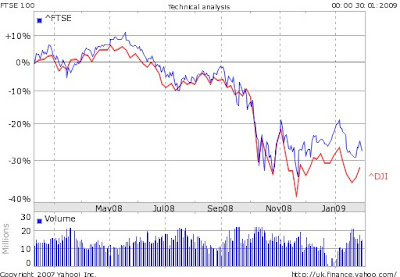
One year FTSE-100 Index (Blue) vs Dow Jones
I suppose if you blur your eyes a bit, then the performance of the equity market in the UK and the U.S. has been 'bobbing along the bottom' for a few months.
But does this reflect that from here, the only way is up? Personally, I think not.
My view is that some people think that the worst is over, and that those investors are therefore more willing to hold onto their stocks because if the prices don't go down, they will go up and that obviously means profit. Others are stepping into the market, buying up shares in companies whom they think have hit rock-bottom, in the hope of making a few quid when their share prices recover.
This is all very nice, but the equity markets aren't the defining factor in how the world's financial system performs. Many BigCo results are showing this in full, bright technicolour for all to see.
Take Toyota, who posted their first loss in history recently. That's not all down to equity markets.
That's mostly down to Joe Public not being able to buy a car because he can't get credit. Joe was made redundant recently, and his bank can't afford to risk lending him the money because the bank itself hasn't got as much available credit as before. That's caused by the interbank lending market falling to lows which are unheard of, so ordinary high street banks have a lot less cash to lend to people in the first place. And because of the gung-ho lending of the past few years (which caused the 'Credit Crunch' in the first place), reducing risk is now the number one priority of every lending company in the market. So because Joe is 'between jobs' he is too risky to lend to.
If Joe Public can't buy a car, then the chances are that tens of thousands of other people will be in the same position. So Toyota sell a crapload less cars than they thought they would, they have a lot less cash to pay the manufacturers who make the car parts, they can't afford to repay the huge debts they've run up because they thought they were going to keep making profits and weren't worried about cash flows, and their entire business and all its dependent companies begin to struggle.
The manufacturers then have to make redundancies of their own, and the whole vicious circle begins again. This domino effect has been seen throughout the world, and I don't think we've come to the end of it, unfortunately.
Everyone knows that the key goal of most governments is to get the banks lending to one another again, and to pump money into economies - and small businesses in particular. I think this will take time, so my prediction is that we'll begin to come out the other end of this downturn sometime in the middle of 2010, after you first see reports of growth in the UK's GDP (therefore officially marking the end of the recession).
So for me personally, it's a case of battoning down the hatches, trying to hold onto my job and trying to manage what little resources I have as best as possible. But it's important to try not to stop spending completely. If everyone is ultra-careful with their money and never buys anything except life's necessities then there won't be enough money flowing around the economy, and the situation gets much worse.
Of course, spending money like a crazed person is not good - but if everyone tries to act normally and spend money if they can then businesses will begin to recover and the economy will strengthen once again.
Fact of Life #1: You Get What You Pay For
Getting stuff cheap is good. You feel like you've won a small victory, that you've beaten those who'd extract all of the money from your wallet given the slightest opportunity.
Being a software developer, I drink coffee a lot. It's not that I find my job boring, and contrary to the stereotype, it's not just a case of sitting like a little monkey in a cubicle writing thousands of lines of code without any human interaction. So even though I do enjoy my job, coffee does help to put an extra positive spin on the day, and it tastes good (mostly).
The only drawback is that I find it quite expensive to support my habit. Obviously I'd prefer to have a Starbucks than an instant coffee, but if every coffee I drank was a Starbucks it'd cost me about £40 a week and I'd be so fat that I'd be the subject of a Channel 4 documentary. So I always have a jar of instant at my desk, because I refuse to drink the pig swill that comes out of the vending machine.
I've tried a few different brands, but learned a lesson when I brought in a jar of 'Nescafe Original'.

It was cheaper to buy than the other types, and you get a huge jar for the price. But the lesson I quickly learned this morning was that you really do get what you pay for.
It's vile. It induces you to screw up your face with horrible bitterness as you drink it, then leaves a taste in your mouth that resembles the pencil you chewed in Maths. I now have a huge jar of coffee on my desk that I won't use.
But in this office of stressed out people, if I leave it in the kitchen it will get used up by those who forgot to bring their own coffee, those who can't afford a Starbucks or just those who will take anything as long as it hasn't come out of the vending machine. So I'll do that.
It's back to the shops to get a better jar of coffee for tomorrow, and it definitely will not be Nescafe.
Being a software developer, I drink coffee a lot. It's not that I find my job boring, and contrary to the stereotype, it's not just a case of sitting like a little monkey in a cubicle writing thousands of lines of code without any human interaction. So even though I do enjoy my job, coffee does help to put an extra positive spin on the day, and it tastes good (mostly).
The only drawback is that I find it quite expensive to support my habit. Obviously I'd prefer to have a Starbucks than an instant coffee, but if every coffee I drank was a Starbucks it'd cost me about £40 a week and I'd be so fat that I'd be the subject of a Channel 4 documentary. So I always have a jar of instant at my desk, because I refuse to drink the pig swill that comes out of the vending machine.
I've tried a few different brands, but learned a lesson when I brought in a jar of 'Nescafe Original'.

It was cheaper to buy than the other types, and you get a huge jar for the price. But the lesson I quickly learned this morning was that you really do get what you pay for.
It's vile. It induces you to screw up your face with horrible bitterness as you drink it, then leaves a taste in your mouth that resembles the pencil you chewed in Maths. I now have a huge jar of coffee on my desk that I won't use.
But in this office of stressed out people, if I leave it in the kitchen it will get used up by those who forgot to bring their own coffee, those who can't afford a Starbucks or just those who will take anything as long as it hasn't come out of the vending machine. So I'll do that.
It's back to the shops to get a better jar of coffee for tomorrow, and it definitely will not be Nescafe.
Berlin
I used to think that Prague was my favourite city, with its unspoilt charm, cheap food and drink, and cool Eastern European style. But in the past few years, because of cheap flights on easyJet or Ryanair, it seems to have become festooned with beer swilling, prostitute-using idiots who seem to be trying their best to ruin it for everyone else before getting deported by angry Czech policemen (who hopefully batter them before putting them on a plane back home). So Prague has lost its charisma a little for me. Not to say that I'd never go back, but it has some pretty serious problems now.
Then there was Rome. Full of history, beauty and class, I thought I was in love with the place until I visited Paris, which blew me away. So for a while, Paris was my favourite city. Even New York couldn't topple it, but last weekend, the title of My Favourite City went to Berlin.
It was my second visit, the first time I was there it was because my brother was about to get married so we'd taken him there for the weekend. This time around, it was the turn of one of my best mates to get engaged - so when trying to decide where to take him, Berlin came off as the obvious winner.
My brother is a very convincing liar, so he had been tasked with telling Neil that we were taking him to Ullapool. We laughed from the bottom of our bellies at the disappointment he tried hard not to display at the prospect of freezing his ass off in a dingy town here in Scotland for his 'stag' weekend.

Struggling to hide his despair, Neil contemplates a weekend in Ullapool
It was only when we got to the airport and after a few fake phone calls that we told Neil that we were not in fact getting picked up by 'Alastair the Minibus Driver who was taking us to the train'. He was delighted that we had actually planned something decent, and that he was going to be freezing his ass off in Berlin instead. That made the effort of arranging everything worthwhile.

'Ah, ich spreche Deutsche! Ich hasse Ullapool.'
So on our descent into Berlin Schonefeld, we were greeted by snow covered fields and temperatures which were well below zero (apparently -20c at night). I'm not going to write an account of the entire weekend, but I'd like to write about some of the best sights we saw during our visit. Berlin is rammed with things to see, and if you're willing to stay in a Hostel, I'd thoroughly recommend The Circus Hostel at Rozenthaler Platz. It's clean, it's cheap, it's in a brilliant location (two stops from Alexanderplatz), it has great staff and a really nice Cafe and Bar for breakfast and booze (not necessarily in that order). Great Places in Berlin
Pergamon Museum
I think the Pergamon Museum is great. When you walk into the main museum you're given an audio guide and headphones, which make the whole thing vastly more interesting than if you were looking at the exhibits with no idea what they are.
The Museum is split into three main parts, the central area which contains the stunning Pergamon Altar, and the two wings which contain the Market Gate from Miletus, the Ishtar Gate and some of the facade of the Temple of Artemis. It was certainly worth a visit, and you could spend hours there, poring over the incredible exhibits which take you back in time.
Tacheles
A lot of people who visit Berlin will never hear about Tacheles. And some who do would be afraid to visit there, fearing they'd be out of place or unwelcome. But it's a place that everyone should visit, since it is about as 'Real' as Berlin can get. (Click on the pictures for larger versions)

Tacheles, before the facade was repaired
It's quite hard to find, being tucked away in the Jewish area of the city. But it's a big place, having been a department store, then an office of the SS. When you walk in, there are artists selling their wares, usually prints of works they've done previously. It's pretty dark and every wall is completely covered in graffiti. On the first floor there's the club where they have paneled windows and a proper bar, with a DJ. Some people seem to think that having glass windows on Tacheles means it's not the same as it used to be. Further upstairs there are corridors with lots of locked doors and mysterious sounds coming from behind them. Some large areas are filled with bits of junk, some sculptures and yet more artists hoping to make a few Euro by selling their stuff. At the top there's an open air bar next to the gig venue, which serves beer by the bottle and lets visitors sit down on manky couches to look out over the city. You can see what's now this area if you look at the photo, at the top floor where the roof arches.
Tacheles isn't the kind of place you forget in a hurry, it's a view onto a completely different world.
Berlin by Bike
The other great thing we did was hire bikes. Even though the temperatures were well below zero, there was snow and black ice everywhere and we had no experience of cycling on busy German roads, we decided that the best way to see the city would be to hire bikes rather than walk everywhere or use the U-Bahn.
We covered about 22km on the day, which isn't bad for a few hours. You can see our route on this map:
 Our route through Central Berlin
Starting out at Rozenthaler Platz, we went down Friedrichstraße to Unter den Linden which contains the foreign embassies and a few car dealerships, as well as the Brandenburg Gate at the bottom.
 Jolley struggles to hide his delight at finding a hat almost exactly the same shape and colour as Neil's
The Reichstag is pretty awesome, but it takes hours to queue up to get inside, so we stood outside for a bit and admired it. Apparently Hitler wanted the Riechstag to form the gatehouse of the Welthauptstadt Germania, which would have made it part of the biggest building the world had ever seen. But of course, Hitler was an idiot and it never came to fruition because instead of the biggest building ever seen, he started the biggest war the world had ever seen. Still, the Reichstag is very impressive.
 David wishes he was as tall as the Riechstag. Now THAT would be fun.
The Tiergarten is beautiful when covered in snow. It's nice to be able to cycle through a park without fear of your tyres being punctured by broken glass or a used syringe, and to have the confidence that you won't be beset by neds who want to nick your bike and sell it for money fur ra dancin'. Berlin is a world apart from the likes of Glasgow. It's full of culture, intrigue and the people of Berlin really love and take care of their city, rather than attacking each other and wrecking everything they can.
 Alan just does not agree with Calum's sock-glove choice
By this time our collective nuts were beginning to freeze off. So preferring to keep at least the option of having kids in the future, we decided it was time to get some warmth. So we stopped at Dunkin' Donuts (not for the first, nor the last time on this trip) and refuelled. Then we arrived at a showcase section of the Berlin Wall. Across the street from the wall, there was an enormous advert for iPod.
 The contrast between the old iron curtain divide between East and West and the new, colourful 'free world' image of the iPod was quite cool.
Maybe it was just me, but I always loved the Trabant. I think it's a symbol of East Berlin, communism, and the acceptance that people must have had for the crap technology to which they were subjected by their regime. The strange thing is, that even though it was small and unreliable, smoky and uncomfortable, the Trabant was loved by East Germans. It's still popular today, even after all this time.
When I saw a whole load of Trabants across the road, I had to have a look, while nobody else appeared to be interested. If I had a collection of cars (as opposed to one rubbish car), I'd definitely add a Trabant to that.
When I saw a whole load of Trabants across the road, I had to have a look, while nobody else appeared to be interested. If I had a collection of cars (as opposed to one rubbish car), I'd definitely add a Trabant to that.
 Next time I'm in Berlin, I'm going to hire one of these
Once we'd seen the Berlin Wall, Checkpoint Charlie and the old Air Ministry, we headed up towards Eberswalder Straße, where I'd heard that the best Currywurst in Berlin could be had. I wasn't wrong! Then we visited the flea market and headed home before our fingers fell off from the cold.
Capt'n Schillo
On our final night we went to the Capt'n Schillo restaurant, which is a barge tied up on the Spree. We were running late, so basically sprinted across Berlin and onto the S-Bahn to try to get there on time so that we wouldn't miss our reservation. We needn't have bothered: we were the only people there! Not sure why, because it was a great little place. A single waiter served us really excellent fish dishes (some had steak) and kept his Amy Winehouse CD on repeat (that was a downer). Then it was speech time. Each person had to give a speech about Neil and why they'd enjoyed the weekend, as well as why he was a good guy who was worth the time and expense of visiting Berlin.
Capt'n Schillo
On our final night we went to the Capt'n Schillo restaurant, which is a barge tied up on the Spree. We were running late, so basically sprinted across Berlin and onto the S-Bahn to try to get there on time so that we wouldn't miss our reservation. We needn't have bothered: we were the only people there! Not sure why, because it was a great little place. A single waiter served us really excellent fish dishes (some had steak) and kept his Amy Winehouse CD on repeat (that was a downer). Then it was speech time. Each person had to give a speech about Neil and why they'd enjoyed the weekend, as well as why he was a good guy who was worth the time and expense of visiting Berlin.

Petrie folk are notoriously emotionally and linguistically stinted, so the best speeches came from others who spoke about the past we'd all had together, the good times and hopefully the better times to come.
All in, Berlin was brilliant. I'd go back again and I'd thoroughly recommend it to anyone.
More pics can be found on Photobucket
Interest Rate Cuts Cut Interest
The Bank of England have cut interest rates again.
Clearly their goal is to benefit businesses because Joe Public who has a tracker mortgage will benefit while John Smith who has savings will lose out, so it must balance out to a certain degree.
So if making money flow back into businesses is the goal, why haven't there been any initiatives to identify the best businesses, and reward them with government backed low interest overdrafts? Is there no way that the government can back up a certain amount of lending to businesses who have already proven their worth, those who have good credit scores and who can prove that they are more likely to be able to repay any debts?
Banks would be exposed to less risk and these companies would have the cash they desperately need to continue to operate.
Specifically, companies in industries like manufacturing, exports, etc - those who have not been responsible for irresponsible borrowing or lending and those who are the cornerstone of British business in the UK and abroad?
Artist Chen Wenling's impression of The God of Materialism
I feel sorry for the people who've worked hard to put some money away for a rainy day, without greedily gambling on property by taking out giant, irresponsible debts on the hope of making a few bucks from property.
Those people appear to be getting punished by other people's materialism and greed with these cuts in interest. The days of keeping cash under pillows appear to be close!
Anyway, those are my simpleton thoughts. It will be interesting to see how all this pans out.
Clearly their goal is to benefit businesses because Joe Public who has a tracker mortgage will benefit while John Smith who has savings will lose out, so it must balance out to a certain degree.
So if making money flow back into businesses is the goal, why haven't there been any initiatives to identify the best businesses, and reward them with government backed low interest overdrafts? Is there no way that the government can back up a certain amount of lending to businesses who have already proven their worth, those who have good credit scores and who can prove that they are more likely to be able to repay any debts?
Banks would be exposed to less risk and these companies would have the cash they desperately need to continue to operate.
Specifically, companies in industries like manufacturing, exports, etc - those who have not been responsible for irresponsible borrowing or lending and those who are the cornerstone of British business in the UK and abroad?

Artist Chen Wenling's impression of The God of Materialism
I feel sorry for the people who've worked hard to put some money away for a rainy day, without greedily gambling on property by taking out giant, irresponsible debts on the hope of making a few bucks from property.
Those people appear to be getting punished by other people's materialism and greed with these cuts in interest. The days of keeping cash under pillows appear to be close!
Anyway, those are my simpleton thoughts. It will be interesting to see how all this pans out.
Old Age Sucks
I hate how people you love have to grow old.
I've always been close to my Grandfather (I call him Papa), and he's one of the greatest blokes on the planet. Hard working, kind, always smiling, always interested in people, never angry.
But he's in his seventies, so age is beginning to take its toll on him. He has problems with his hearing, which can affect his balance, and yesterday he fell in the street and cracked his ribs, broke his nose and gave himself two massive black eyes.
It's horrible how there's nothing you can do to stop it happening. I've tried helping out to make his hearing situation better by getting him a portable loop system (wasn't really portable and didn't really work), and by getting him two Asus EeePCs with bespoke software on them that allows for IM over Wi-Fi. Those were designed to help by allowing someone to sit and type messages to him while a conversation was going on, to allow him to keep up. They worked perfectly but he didn't have the motivation to sit and use them or to ask people to type messages for him.
This is why I think old age sucks. You should be able to play football with your Grandad, or go snowboarding with him. You shouldn't have to watch him grow old and feeble, becoming more and more frustrated at what he can't do.
Good job my beliefs give me a hope for the future then.
I've always been close to my Grandfather (I call him Papa), and he's one of the greatest blokes on the planet. Hard working, kind, always smiling, always interested in people, never angry.
But he's in his seventies, so age is beginning to take its toll on him. He has problems with his hearing, which can affect his balance, and yesterday he fell in the street and cracked his ribs, broke his nose and gave himself two massive black eyes.
It's horrible how there's nothing you can do to stop it happening. I've tried helping out to make his hearing situation better by getting him a portable loop system (wasn't really portable and didn't really work), and by getting him two Asus EeePCs with bespoke software on them that allows for IM over Wi-Fi. Those were designed to help by allowing someone to sit and type messages to him while a conversation was going on, to allow him to keep up. They worked perfectly but he didn't have the motivation to sit and use them or to ask people to type messages for him.
This is why I think old age sucks. You should be able to play football with your Grandad, or go snowboarding with him. You shouldn't have to watch him grow old and feeble, becoming more and more frustrated at what he can't do.
Good job my beliefs give me a hope for the future then.
Epidemic!
It seems there is an epidemic of cold and flu. Most people I know have had or currently have a cold or flu symptoms.
Over the past few weeks I've been trying to avoid people who've felt ill. The wife got a really bad flu on Friday and has been sick, tired and sleepy all weekend. So I slept in the other room, took a Vitamin C every day, kept the windows open and tried to keep my distance from her. Which was surprisingly difficult, it made me realise I like cuddles more than I thought I did! blech! ;)
And I thought I'd been successful in avoiding any illness, even though people around me were dropping like flies with runny noses, nausea and sore bodies! But no. I woke up this morning feeling freezing, sore all over and with a killer headache. So it's a pain in the ass, especially since I'm going to Berlin on Friday.
This led me to think about how people in the UK are far too willing to infect each other with minging viruses and colds. People who are ill go to work, thinking they should just 'power on through', and possibly unknowingly infect lots of the people they come into contact with.
For example, my wife is an optometrist and went to work on Saturday because she felt she had to because she doesn't get sick pay(!) and because she had to phone in a couple of weeks ago for another heavy cold she'd had. Her symptoms were so bad that she doesn't remember her working day, doesn't remember anything about the patients she had and had to turn her light off and sleep on the floor at lunchtime to avoid what she thought was a distinct possibility of fainting.
Good for her, you might think - and that's fair enough. But she should not have been allowed to go to work and probably pass her flu onto the people she was working with and her patients.
I think there should be rules in the UK about avoiding spreading these viruses and infections, especially if you work with the public. In the wife's case, she should have been told to go home straight away as soon as it became clear she was ill.
But now I'm ill, and I'm working today. So I should take my own advice and go home. But how bad would it have looked if I'd phone in sick on the first Monday back after Christmas/New Year?
"Hypocrite!" shout the non existent readers of this blog, "Hypocrite!"
But if there were rules in the workplace around sending ill staff home, then my boss would've told me to leave. Which would've been better than me awkwardly telling him I'm ill and need to get some rest.
Lemsip Max Cold and Flu Direct: Genius. Just hope I don't get a cough before I go to sub-zero Berlin, I can imagine getting whacked in the face by angry, sleepy roommates.
Over the past few weeks I've been trying to avoid people who've felt ill. The wife got a really bad flu on Friday and has been sick, tired and sleepy all weekend. So I slept in the other room, took a Vitamin C every day, kept the windows open and tried to keep my distance from her. Which was surprisingly difficult, it made me realise I like cuddles more than I thought I did! blech! ;)
And I thought I'd been successful in avoiding any illness, even though people around me were dropping like flies with runny noses, nausea and sore bodies! But no. I woke up this morning feeling freezing, sore all over and with a killer headache. So it's a pain in the ass, especially since I'm going to Berlin on Friday.
This led me to think about how people in the UK are far too willing to infect each other with minging viruses and colds. People who are ill go to work, thinking they should just 'power on through', and possibly unknowingly infect lots of the people they come into contact with.
For example, my wife is an optometrist and went to work on Saturday because she felt she had to because she doesn't get sick pay(!) and because she had to phone in a couple of weeks ago for another heavy cold she'd had. Her symptoms were so bad that she doesn't remember her working day, doesn't remember anything about the patients she had and had to turn her light off and sleep on the floor at lunchtime to avoid what she thought was a distinct possibility of fainting.
Good for her, you might think - and that's fair enough. But she should not have been allowed to go to work and probably pass her flu onto the people she was working with and her patients.
I think there should be rules in the UK about avoiding spreading these viruses and infections, especially if you work with the public. In the wife's case, she should have been told to go home straight away as soon as it became clear she was ill.
But now I'm ill, and I'm working today. So I should take my own advice and go home. But how bad would it have looked if I'd phone in sick on the first Monday back after Christmas/New Year?
"Hypocrite!" shout the non existent readers of this blog, "Hypocrite!"
But if there were rules in the workplace around sending ill staff home, then my boss would've told me to leave. Which would've been better than me awkwardly telling him I'm ill and need to get some rest.
Lemsip Max Cold and Flu Direct: Genius. Just hope I don't get a cough before I go to sub-zero Berlin, I can imagine getting whacked in the face by angry, sleepy roommates.
Australia
The trailer for Australia made it look rubbish. So that, combined with the fact that it's had quite a few poor reviews (even the Australians thought it was mediocre), when I was told that we were planning to go and see it in the cinema, I was a little skeptical.
I shouldn't have been. It was superb.
Yes, it was long. Yes, it was a bit indulgent. But I thought it was interesting, it kept me interested throughout and with its beautiful cinematography and sound, it really does remind you of why the cinema will always be superior to sitting watching a movie at home. It also made me want to visit Australia... maybe that was one of the goals of the movie!
Baz Luhrmann's movies have struck a cord with me in the past, I loved Romeo and Juliet, I liked Moulin Rouge (HATED Sweaty Ballroom though). So I was expecting it to be hugely stylised to the same extent as his older movies, but I think he realised that it wouldn't have worked. So you can spot his watermarks on the film, but it's not too much.
A lot of people think that Australia could have been an hour shorter - but I disagree. I can't understand why people have such low tolerance for long movies. They whine when it's too short, they whine when it's too long. Crikey!
Hugh Jackman: Good, but a face like a bag of pig's arses. Nicole Kidman: Always the same. But it worked, and the little aboriginal kid was brilliant.
Needless to say, I disagree with the Canberra Times and it's a faux five to them for their review. It's a good movie, and I've already recommended Australia to my Mum.
I shouldn't have been. It was superb.
Yes, it was long. Yes, it was a bit indulgent. But I thought it was interesting, it kept me interested throughout and with its beautiful cinematography and sound, it really does remind you of why the cinema will always be superior to sitting watching a movie at home. It also made me want to visit Australia... maybe that was one of the goals of the movie!
Baz Luhrmann's movies have struck a cord with me in the past, I loved Romeo and Juliet, I liked Moulin Rouge (HATED Sweaty Ballroom though). So I was expecting it to be hugely stylised to the same extent as his older movies, but I think he realised that it wouldn't have worked. So you can spot his watermarks on the film, but it's not too much.
A lot of people think that Australia could have been an hour shorter - but I disagree. I can't understand why people have such low tolerance for long movies. They whine when it's too short, they whine when it's too long. Crikey!
Hugh Jackman: Good, but a face like a bag of pig's arses. Nicole Kidman: Always the same. But it worked, and the little aboriginal kid was brilliant.
Needless to say, I disagree with the Canberra Times and it's a faux five to them for their review. It's a good movie, and I've already recommended Australia to my Mum.
Oracle BPM: A Big Pointless Mess?
When suggesting the use of an out of the box BPM product, most developers I know would object.
I've heard a few horror stories about Oracle BPM (previously known as Aqualogic BPM, and Fuego before that) which almost completely deterred me from trying it out.
In January 2008 I attended a training course on this technology, and left unconvinced. I couldn't figure out what situation could arise where this technology would make a good fit, considering its drawbacks (slightly ugly UI appearance, seemingly complicated acronyms, clunky and buggy developer IDE).
A few months passed, and I didn't hear much about BPM. Then I started work on a project which had a really tight timescale. It involved many different people who were all in different roles, and it had to link into a Sybase database to persist data and allow for full reporting and outgoing feeds.
I don't claim to be a Java expert (I'm anything but), so I needed something that'd do some of the work for me and save me plugging away at Java, JSP and CSS files, plus all the basic groundwork you need to do just to get a web application off the ground. Then someone took a deep breath, braced themselves for abuse and suggested 'Fuego'.
At first, I was completely opposed to using Fuego (which I quicly learned had been bought by Aqualogic, then in turn bought by Oracle). But I downloaded the Studio software and dug out the training manuals I had been given in the course in January.
It didn't take long to get up to speed with it, and with the new Eclipse based IDE, Oracle BPM became a little more convincing as the solution I was looking for. Given than I needed to develop something in a few weeks which managed user roles, complicated state transitions and persistence to Sybase, I decided to give it a go.
Two months down the line, the project has been deployed for user testing, we have a fully featured Sybase database which does almost everything we needed it to do, the user interface is ready (though a little clunky) and it handles roles and the necessary state transitions with ease. So far, the feedback from the customer has been excellent, and I'm now convinced that Oracle BPM is a worthy solution.
Though it needs some serious work in places. For example:
Unless you want to use it solely for workflow, with your own UI bolted on. In that case, leave well alone: there are better solutions out there.
I've heard a few horror stories about Oracle BPM (previously known as Aqualogic BPM, and Fuego before that) which almost completely deterred me from trying it out.
In January 2008 I attended a training course on this technology, and left unconvinced. I couldn't figure out what situation could arise where this technology would make a good fit, considering its drawbacks (slightly ugly UI appearance, seemingly complicated acronyms, clunky and buggy developer IDE).
A few months passed, and I didn't hear much about BPM. Then I started work on a project which had a really tight timescale. It involved many different people who were all in different roles, and it had to link into a Sybase database to persist data and allow for full reporting and outgoing feeds.
I don't claim to be a Java expert (I'm anything but), so I needed something that'd do some of the work for me and save me plugging away at Java, JSP and CSS files, plus all the basic groundwork you need to do just to get a web application off the ground. Then someone took a deep breath, braced themselves for abuse and suggested 'Fuego'.
At first, I was completely opposed to using Fuego (which I quicly learned had been bought by Aqualogic, then in turn bought by Oracle). But I downloaded the Studio software and dug out the training manuals I had been given in the course in January.
It didn't take long to get up to speed with it, and with the new Eclipse based IDE, Oracle BPM became a little more convincing as the solution I was looking for. Given than I needed to develop something in a few weeks which managed user roles, complicated state transitions and persistence to Sybase, I decided to give it a go.
Two months down the line, the project has been deployed for user testing, we have a fully featured Sybase database which does almost everything we needed it to do, the user interface is ready (though a little clunky) and it handles roles and the necessary state transitions with ease. So far, the feedback from the customer has been excellent, and I'm now convinced that Oracle BPM is a worthy solution.
Though it needs some serious work in places. For example:
- The Eclipse based IDE is full of annoying little bugs. Nothing which stops you working or causes you to lose work, just irritiating things like not being able to change the font on more than one Presentation control at once.
- The documentation is nothing short of horrific. It looks like it was done as an afterthought by someone who was drunk after the post-release party.
- There aren't enough options for customising the UI in the WorkSpace if you use a shared instance for Production deployments.
Unless you want to use it solely for workflow, with your own UI bolted on. In that case, leave well alone: there are better solutions out there.
Subscribe to:
Posts (Atom)